What is Children Speech?
Speech data from child speakers, grouped by age band, used for children's speech recognition and children's education products.
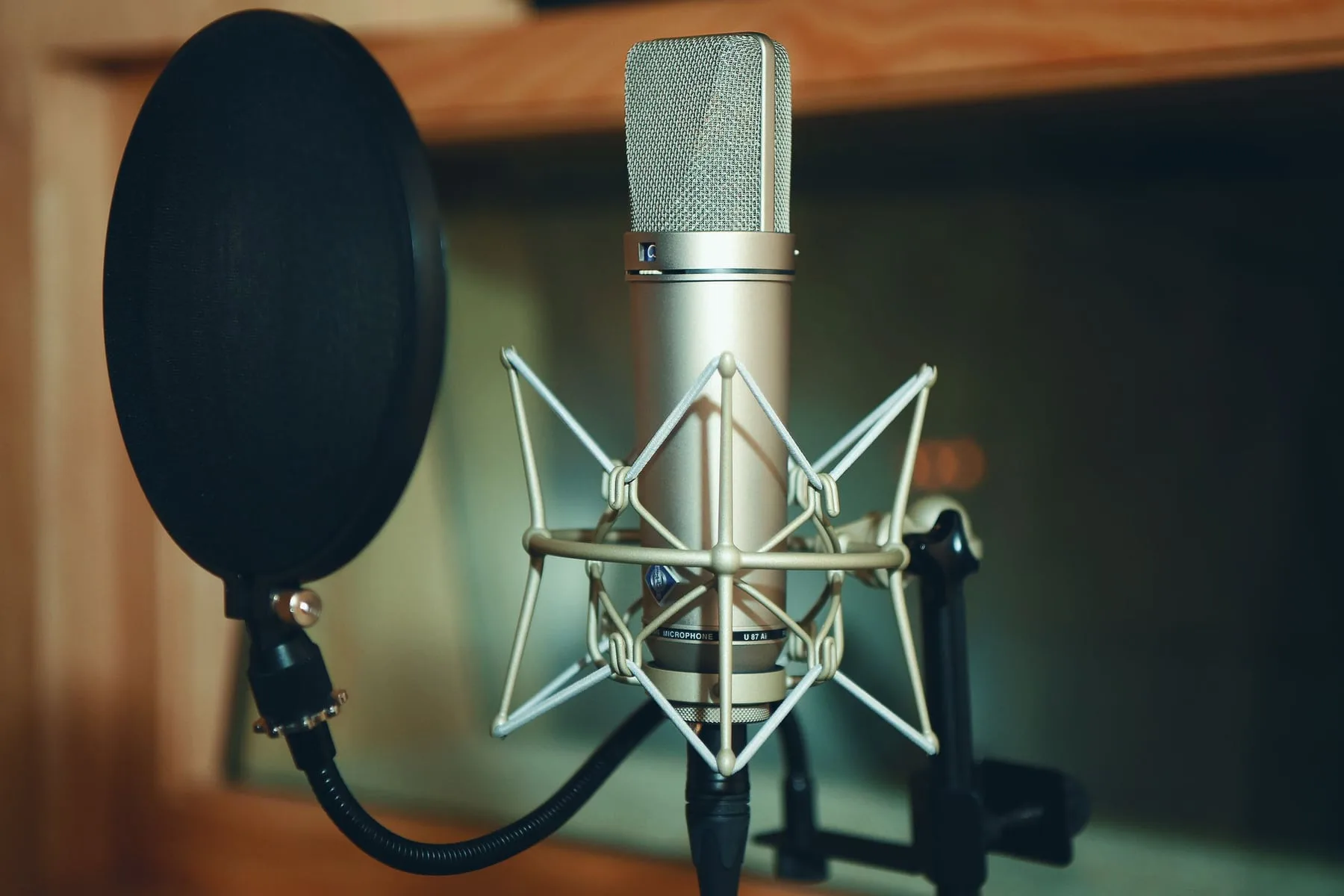
Children speech data is audio from speakers below adult age, usually grouped by age band because the acoustic properties change substantially as a child grows. Pitch, formants and speaking rate all shift, which means a model trained on one age band does not transfer well to another.
The compliance position is the strictest of any speech category. A child cannot consent, a guardian must consent on their behalf, and the collection process has to be defensible to a reviewer who was not present. This is not a formality and it is not negotiable.
The uses are children's speech recognition, serving voice interfaces built for young users, and children's education products, where the system has to understand a child reading or answering rather than an adult.
What buyers get wrong
Children's speech is the most compliance-sensitive category. A guardian must sign consent, and the collection process has to survive review. This is a hard requirement and cannot be skipped.
The specification detail that decides everything
Age banding (such as 3–5 / 6–8 / 9–12 years) and guardian consent documents must be included with every delivery.
This is the line item that most often separates a dataset that works from one that gets re-ordered. It belongs in the specification before production starts, not in the delivery review.
How we source it
We do not hold inventory in this category. A requirement comes in, we match it to a producer who can meet the specification, and we agree the quality bar with both sides before recording begins. A pilot batch goes first so misalignments surface early.
Scenarios this covers
Buyers rarely ask for a category by name. They describe a situation, and the situation is what tells us whether this category is the right one. If yours is in the list, name it in the brief and it goes straight into the specification. If it is not, describe it anyway, because it usually means the requirement sits in a neighbouring category.
What good Children Speech looks like
Children speech data is judged on two axes at once: acoustic coverage and compliance. A corpus strong on one and weak on the other is not usable.
-
Age banding narrow enough to be meaningful
Three to five, six to eight, nine to twelve. Wider bands mix acoustically different speakers and the model learns an average that fits nobody well.
-
Guardian consent that names the purpose
A signature on a general release is not sufficient. The record has to state that the recording will train machine learning systems, in language a layperson understands.
-
Recording conditions appropriate to children
Sessions are shorter, and the setup has to work for a speaker who will not sit still for an adult-length session. A protocol designed for adults produces thin data here.
-
Speech that is genuinely child speech
Read material is easier to collect and less representative than a child talking. The specification should say which one it is buying rather than accept whichever is easier to supply.
-
Compliance documentation delivered with the data
Guardian consent records, the collection protocol, and the retention and withdrawal policy, delivered as a set rather than on request.
Public datasets in this category
These are openly documented resources, not products we sell. Each one covers part of the category, and knowing where each stops is usually what decides whether a project needs a collection of its own.
-
CSLU Kids
A classic corpus of children reading and repeating words and sentences, collected in the 1990s. It remains a standard reference and the audio quality and age coverage reflect its era.
-
MyST
Children reading aloud from a fixed set of stories, with a range of ages. Useful for read-speech work with children and limited to reading, which is not how children actually talk to devices.
-
OGI Kids
A collection of children reading and speaking, with age and gender labels. Small, and one of the few resources that documents age explicitly.
-
Why child speech stays scarce
Recording children requires parental consent, which is a heavier process than adult consent, and it is a regulated category in several jurisdictions. That is the structural reason public corpora are small and old.
Questions to ask a supplier
Questions a supplier working with children should be able to answer without hesitation.
- What does the guardian consent record say, and can we see the template?
- How are sessions run so that a child is not recorded beyond the point of comfort or attention?
- Who supervises a recording session, and are they background-checked?
- What is the withdrawal policy, and what happens to a child's recordings if a guardian withdraws?
- How is the age band of each speaker verified rather than reported?
The vague answer in this category is about age. A supplier who says the corpus contains children without giving the age distribution has described a population that spans a decade of vocal development. A six-year-old and a twelve-year-old are different acoustic problems, and a model trained across both without age labels cannot be tuned for either.
A verifiable answer gives the age bands, the number of speakers per band, and the elicitation method. Reading a prompt aloud and answering a question produce different speech, and children differ from adults in how much that matters. Ask how many sessions were discarded because a child would not engage, since that number tells you whether the elicitation was designed for children at all.
Technical attributes
The items below are the ones a specification can hold a producer to, and the ones that decide whether a delivery is usable for training rather than only present.
| Age bands | Narrow bands, documented per speaker |
|---|---|
| Guardian consent | Purpose-specific, with the template available for review |
| Session length | Short, designed around attention span |
| Supervision | Named and checked, documented in the protocol |
| Speech type | Read, spontaneous, or both |
| Delivery format | Audio with per-speaker age band and a consent reference |
The age band column decides what the corpus can serve, and it is the one most often collapsed into a single label. Child speech recognition is used in reading tutors, toys and education products, and each targets a narrower band than children. A corpus labelled only as children forces the buyer to accept a model that is average across the whole range.
The values come from the product and from the consent process. A reading application needs the six to nine band with the reading task itself, and it needs consent handled through a parent or guardian with the child assent recorded. Both of those are specification items, and neither can be added at delivery.
A mistake here is both technical and ethical. Collecting child speech without a consent chain that names the guardian, the purpose and the retention period makes the corpus unsellable regardless of its quality, and it is the one defect that cannot be argued around.
How Children Speech is collected
Collection is designed around the child rather than around the recording, and the compliance work happens before anyone is recorded.
- Protocol design and review. The consent record, the session protocol and the supervision rules are written and reviewed before recruitment begins.
- Recruitment through guardians. Contact runs through the guardian at every stage, and the guardian is present or nearby for the session.
- Short, supervised sessions. Sessions are built to fit a child's attention span, with a stop rule that ends a session rather than pushing through it.
- Purpose-specific consent capture. The guardian signs a record naming machine learning training as a purpose, before the first recording, with a copy retained.
- Annotation and compliance assembly. Transcription and labelling delivered together with the consent records and the protocol documentation.
After recording, the sessions are transcribed, checked for engagement, and packaged with per-speaker metadata covering the age band, the elicitation task and the consent record. The consent record is verified before the audio is accepted, not after the batch has been assembled.
The pilot for children speech is a short session per age band, run to test the elicitation rather than the recording chain. A task that works for a ten-year-old usually does not work for a six-year-old, and the pilot is where that shows. It also establishes how long a session can run before attention changes the speech, which sets the session length for the full batch.
Acceptance is checked on the age band distribution and on the consent record for every speaker, verified before the audio is accepted. The specification should state the age bands and the guardian consent fields before recruitment starts, because a consent chain that does not name the purpose and the retention period cannot be repaired afterwards. Where the pilot fails, the elicitation is redesigned rather than the consent process relaxed.
How a delivery goes wrong
The defects below are the ones that recur across this category. Each is decided at collection or annotation time, which is why none of them can be repaired in delivery review.
-
Age range collapsed into one label
Acoustics change substantially between five and twelve. A corpus labelled "children" without age bands cannot be stratified, and a model trained on the average may serve no age group well.
-
Consent covers recording but not commercial licensing
Parental consent forms written for a research project often do not grant commercial training rights. This is the most common blocker in this category and it is discovered late, after the recordings exist.
-
Speech was prompted rather than spontaneous
Children reading a script produce a different prosody from children asking for something. Prompted speech is easier to collect and does not represent the deployment condition.
Why this matters to buyers
Children's voice interfaces are a growing product category, and the acoustic mismatch between a child speaker and an adult-trained model is large. A system that works for an adult and fails for a six-year-old fails for the user it was built for.
The second reason is that this is the category where a compliance failure does the most damage. The consent chain has to survive review, and a corpus without it is not merely unsellable, it is a liability that follows everyone who handled it.
A children speech model trained on the wrong age band fails in a way that is easy to mistake for a general quality problem. The product works for older children and not for younger ones, and the reports describe it as inconsistent rather than as age-specific. Finding the real cause takes a round of field data that labelling age would have avoided.
The second cost is regulatory. Child data carries obligations that adult data does not, and a corpus that cannot demonstrate guardian consent and a stated retention period is a liability rather than an asset. Buyers in education and toys audit this before anything else, and failing the audit ends the conversation.
A children speech corpus with narrow age bands gives a product that works for the group it is sold to. A reading application can be tuned to the band it serves rather than averaged across a decade of vocal development, and the guardian consent record is what makes the corpus sellable at all.
The second gain is that the elicitation is documented. Tasks that engage a six-year-old are not obvious, and a delivery that records what was used can be extended to a new band without repeating the design work. That record is what makes a second batch cheaper than the first.
Specification at a glance
| Category | Children Speech |
|---|---|
| Group | Speech data |
| Critical spec | Age banding (such as 3–5 / 6–8 / 9–12 years) and guardian consent documents must be included with every delivery. |
| Included by default | Pilot batch, metadata schema, source and consent documentation |
| Pricing | Quoted from specification. No published rates |
Children Speech across languages
This category is available in every language we cover. The difficulty changes with the language, which is why each language page documents its own constraints.
Related categories
-
Call Center Speech
Customer-service calls, simulated rather than intercepted, capturing both the agent and the caller side, used for call center QC, intent recognition, and dialogue systems.
-
Conversational Speech
Speech from natural conversation between two or more people, on open or semi-structured topics, used for conversational AI, voice assistants, and small talk models.
-
Singing Voice
Vocal recordings with melody, in both a cappella and accompanied form, used for singing voice synthesis, music information retrieval, and lyric alignment.
-
Speech Commands
Targeted recordings of short command words or phrases, usually with many speakers reading each entry several times over, used for wake words and on-device command recognition.
-
Read Speech
Recordings of speakers reading specified text, with clear pronunciation and known text, the base material for TTS and ASR.
-
Podcast Speech
Long-form podcast and interview audio, either solo monologue or two-person conversation, used for long-form speech recognition and speaker modeling.
Questions about Children Speech
Why is a general release not enough?
Because consent has to be specific and informed. A general release does not tell the guardian that the recording will train a machine learning model, and without that the consent does not cover the purpose. The record has to name it.
Do you record children reading or speaking?
Per the specification, and the two are different products. Reading is easier to collect and easier to annotate; spontaneous speech is more representative of how a child actually uses a voice product.
What happens if a guardian withdraws consent later?
The recordings are located and removed, and downstream recipients are notified under the terms of the agreement. That is why every file carries a speaker identifier mapping to a consent record, and why the withdrawal policy is written before collection rather than after.
How are age bands verified?
By the guardian's statement at recruitment, recorded against the speaker identifier, and by the session supervisor where the band is ambiguous. The verification method belongs in the protocol so that it is the same for every speaker.
Do you have Children Speech available now?
No. We do not hold inventory. Everything is produced against a specification. That means the timeline starts when the spec is agreed rather than immediately, and it also means the data matches your requirement instead of approximately matching something already built.
Can this be combined with other categories in one delivery?
Yes, and it is common. A single specification can cover several categories across several languages, with one pilot batch and one quality bar. It usually reduces total cost because contributor recruitment and project setup are shared.
What does the consent documentation cover?
Signed contributor consent stating the intended use, the collection methodology, and the annotation guideline the data was produced under. For projects involving EU data subjects the chain is built to satisfy GDPR, including the transfer mechanism. The terms for moving the data across a border.
Request Children Speech
Tell us the language, the hours, and what the data needs to look like. You will get a real number and a real timeline, not a range. If we cannot source it well, we will tell you that instead.
- Pilot batch before the full run, so problems surface early.
- Consent documentation delivered with the data.
- No medical or clinical data. No recorded telephone calls.
- You send the spec Language, hours, recording conditions, and the deadline.
- We reply within two business days A real number and a real timeline, not a range.
- You approve a pilot batch A small run first, so problems surface before the full order.
- Full run, then delivery with documents Audio, transcripts, and the consent record for every speaker.