What is Embodied AI Data?
Multimodal data generated as robots and embodied agents operate in real environments: vision, action trajectories, and language instructions.
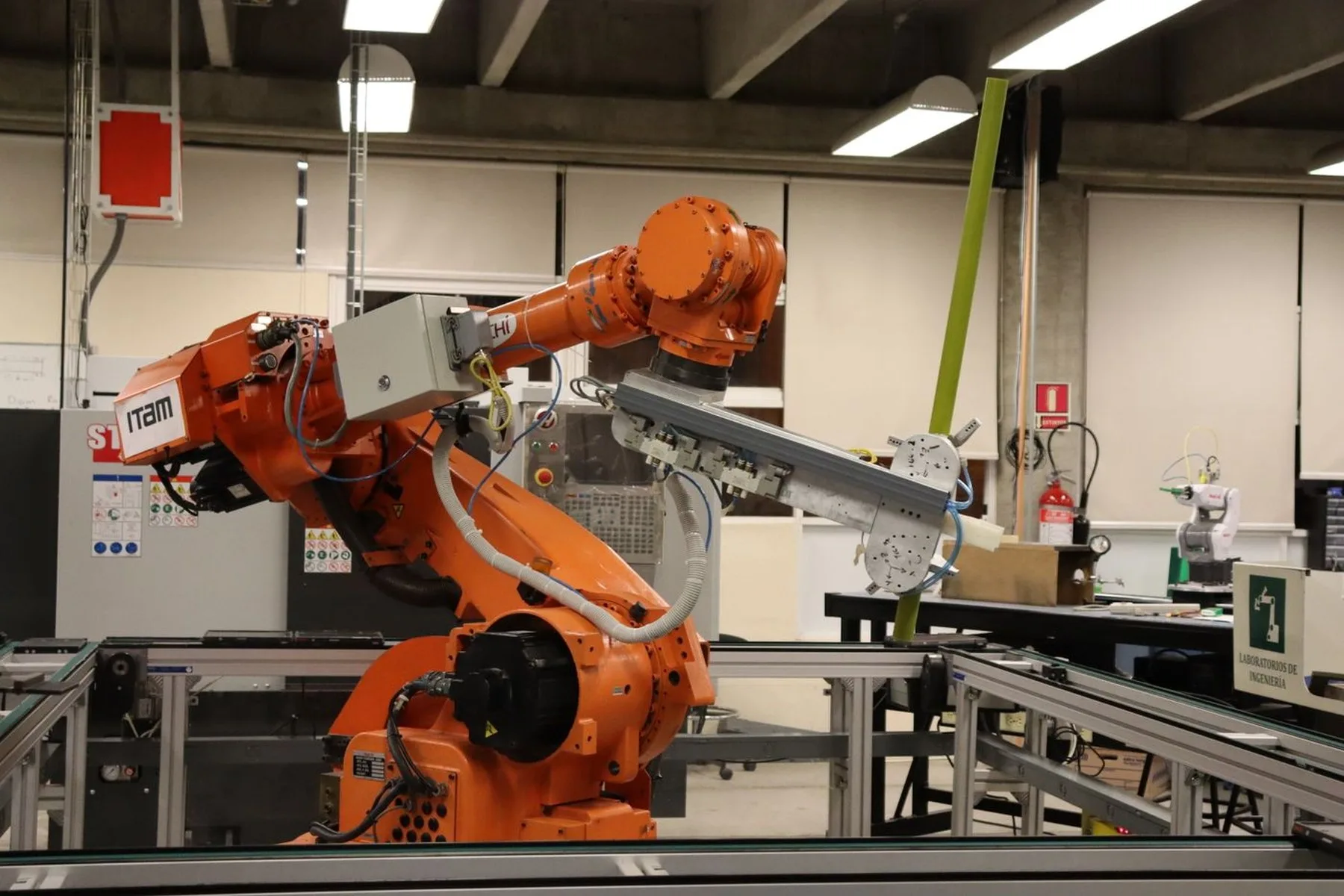
Embodied AI data is multimodal: what a robot or embodied agent saw, what it did, and what it was told to do, recorded together. The three streams are only useful as a set, because the learning target is the mapping from instruction and observation to action.
What separates it from computer vision data is the action channel. An image corpus records what is in the frame; an embodied corpus records what the agent did next, which is the signal imitation learning and policy learning need.
The hard part is that the same instruction maps to different action sequences in different environments. Picking up a cup is a different trajectory on a table than on a shelf, and the annotation scheme has to represent the environment as well as the action.
What buyers get wrong
The hard part is aligning action with language. The same instruction maps to completely different action sequences in different environments, and the annotation scheme is far more complex than for speech.
The specification detail that decides everything
Whether action trajectories and force feedback are included determines whether the data supports imitation learning or only visual pretraining.
This is the line item that most often separates a dataset that works from one that gets re-ordered. It belongs in the specification before production starts, not in the delivery review.
How we source it
We do not hold inventory in this category. A requirement comes in, we match it to a producer who can meet the specification, and we agree the quality bar with both sides before recording begins. A pilot batch goes first so misalignments surface early.
Scenarios this covers
Buyers rarely ask for a category by name. They describe a situation, and the situation is what tells us whether this category is the right one. If yours is in the list, name it in the brief and it goes straight into the specification. If it is not, describe it anyway, because it usually means the requirement sits in a neighbouring category.
What good Embodied AI Data looks like
Embodied data is judged on whether the three streams are synchronized and whether the action channel is real.
-
Instruction, observation and action on one timeline
Frame-level or step-level correspondence, documented, because the alignment is the learning signal rather than a delivery detail.
-
Action representation stated
Joint positions, end-effector poses, or discrete primitives. Different representations support different learning methods, and a corpus that does not say which it uses cannot be evaluated against another.
-
Force and tactile channels where manipulation is the target
Contact-rich tasks need the contact signal, and a vision-only recording of the same task does not substitute for it.
-
Environment metadata
The scene, the object set, and whether the setup was reset between episodes, because generalization claims depend on all three.
-
Task success labelled per episode
Whether the episode succeeded and by what criterion, because a corpus of undifferentiated attempts trains a policy on its own failures.
Public datasets in this category
These are openly documented resources, not products we sell. Each one covers part of the category, and knowing where each stops is usually what decides whether a project needs a collection of its own.
-
Open X-Embodiment
A collaboration pooling robot manipulation datasets from many labs into one schema, covering dozens of robot platforms. It is the largest public resource in this category and the schema unification is as valuable as the data.
-
DROID
A large-scale robot manipulation dataset collected across many scenes and institutions with a consistent protocol. The consistency is the point: it makes results comparable across sites.
-
BridgeData V2
A manipulation dataset covering many tasks and environments with a single robot platform. Task diversity is high and the platform is one, which limits transfer to other hardware.
-
Why embodiment makes reuse hard
Data collected on one robot arm does not transfer directly to another, because the action space, the dynamics and the sensor placement all differ. That is the structural reason this category is collected per programme rather than bought once.
Questions to ask a supplier
Questions that establish whether the action channel is real and whether the setup is reproducible.
- What action representation is used, and is it documented?
- At what granularity are instruction, observation and action synchronized?
- Are force or tactile channels recorded for manipulation tasks?
- Is task success labelled per episode, and by what criterion?
- Can you supply the environment and object list so a policy can be evaluated on the same setup?
The vague answer in this category is about the platform. A supplier who says the corpus covers manipulation tasks without naming the robot, the gripper and the control frequency has described a task list rather than a dataset. Data collected on one arm does not transfer to another, because the action space and the dynamics differ.
A verifiable answer names the platform, the action representation, the control rate and the number of distinct scenes. Ask how many operators contributed, because a corpus collected by one person encodes that person motion style, and a policy trained on it reproduces the style rather than the task.
Technical attributes
The items below are the ones a specification can hold a producer to, and the ones that decide whether a delivery is usable for training rather than only present.
| Action representation | Joint, end-effector, or discrete, documented |
|---|---|
| Synchronization granularity | Frame or step level, stated |
| Force and tactile | Included or not, required for manipulation tasks |
| Environment metadata | Scene and object set documented |
| Episode outcome | Success or failure labelled per episode |
| Delivery format | Synchronized multimodal streams with a per-episode manifest |
The action representation column decides whether the corpus can be trained on at all, and it is the one most often left to be inferred. Joint positions, end-effector poses and velocities are different representations and they are not interchangeable without a model of the robot. A delivery that does not state which one it uses cannot be used without reverse engineering.
The values come from the robot you intend to deploy on. If the target platform is a specific arm with a specific gripper, then the action space, the control rate and the sensor set all come from that hardware. A supplier proposing a generic specification is proposing a corpus that will need conversion.
A mistake here is expensive in a way that is hard to see early. The corpus trains and the policy runs in simulation, and the failure appears only on the physical robot as a systematic offset that no amount of fine-tuning removes. Correcting it means re-collecting on the target platform, which is the most expensive form of rework in this category.
How Embodied AI Data is collected
Collection is a hardware and reset problem before it is an annotation problem.
- Task selection against the capability target. Tasks are chosen for the manipulation or navigation skill the model needs, not for how easy they are to record.
- Teleoperation or demonstration capture. Demonstrations are recorded from a competent operator with the capture rig documented, because the action quality sets the ceiling on the resulting policy.
- Synchronized multimodal logging. Vision, proprioception, action and any force channel are logged on one clock, and the synchronization is verified rather than assumed.
- Episode reset and environment control. The setup is reset between episodes and the reset policy is recorded, because a corpus collected without resets leaks the previous episode into the next.
- Outcome labelling and verification. Each episode is labelled with its outcome against a stated criterion, and a sample is reviewed for labelling consistency.
After collection, the episodes are checked for sensor synchronisation, failures are retained and labelled, and the files are packaged with per-episode metadata covering the platform, the operator and the scene. The synchronisation check is the step that decides whether the action labels point at the right frame.
The pilot for robot data is a short set of episodes on the target platform and gripper, run before the collection scales, because the property being tested is whether the action space and the control rate are the ones the policy will run at. A few dozen episodes shows the sensor synchronisation and the demonstration quality, and it also shows how many episodes an operator can produce in a session. That figure sets the schedule.
Acceptance is checked on the synchronisation between the streams and on the retained failures, verified before the batch is accepted. The specification should name the platform, the action representation and the control rate before collection starts. Where the pilot shows the platform does not produce the required action space, the platform is changed rather than the representation converted, since a converted action space is an approximation of the one the policy needs.
How a delivery goes wrong
The defects below are the ones that recur across this category. Each is decided at collection or annotation time, which is why none of them can be repaired in delivery review.
-
Action space was not documented
Joint positions, end-effector poses and velocities are different action representations and they are not interchangeable. A delivery that does not state which one it uses cannot be trained on without reverse engineering.
-
Failed episodes were removed
Successful demonstrations only produce a policy that has never seen a recovery. Failed attempts are where the useful signal about robustness lives, and dropping them is usually presented as quality control.
-
One platform, presented as general
A corpus collected on a single robot and a single gripper encodes that hardware. Delivered as "embodied AI data" it looks broad and transfers narrowly, and the platform list belongs in the manifest.
Why this matters to buyers
Imitation learning needs demonstrations, and demonstrations are expensive to produce. A corpus amortizes that cost across many buyers, and the property that makes it reusable is documentation of the action representation and the environment.
The second driver is generalization. A policy trained in one environment is expected to work in another, and whether it does depends on how much environment variation is present in the training data. That is a collection design decision rather than a training one.
A policy trained on a corpus from another platform fails on the robot it was meant for, and the failure looks like a learning problem. Teams spend months on architecture and reward design before accepting that the action space is the issue. The time lost is larger than the collection would have cost.
The second cost is the demonstration budget. Robot time is the scarcest resource in this category, and a corpus that has to be re-collected consumes operator hours that were already spent once. Retaining failed episodes is what makes the first collection worth more, and it costs nothing at collection time.
A robot corpus collected on the target platform gives a policy that transfers to the hardware without a conversion layer. The retained failures mean the policy learns where the task is hard rather than only what success looks like, which is what lets it survive contact with a real arm.
The second gain is that the operator throughput is known. Robot time is the scarcest resource in this category, and a delivery that records how many episodes a session produces lets a second collection be scheduled rather than guessed. That figure is what turns a demonstration budget into a plan.
Specification at a glance
| Category | Embodied AI Data |
|---|---|
| Group | New data paradigm |
| Critical spec | Whether action trajectories and force feedback are included determines whether the data supports imitation learning or only visual pretraining. |
| Included by default | Pilot batch, metadata schema, source and consent documentation |
| Pricing | Quoted from specification. No published rates |
Related categories
-
Synthetic Data
Data generated by models or simulation engines, used to fill gaps where real data is scarce, cover long-tail scenarios, and control cost.
-
World Model Data
Environment interaction data for training world models, emphasizing temporal consistency, physical plausibility, and predictability.
Questions about Embodied AI Data
Can we use vision-only data for policy learning?
For visual pretraining, yes. For imitation learning, no. The policy has to learn the mapping from observation to action, and a corpus without the action channel does not contain the thing being learned.
Why does the action representation matter so much?
Because it determines which learning methods are available and whether results can be compared. Two corpora recording the same demonstrations in different representations are not interchangeable, and a corpus that does not state its representation cannot be evaluated against another.
How is task success defined?
By a stated criterion, usually a completion condition checked by a human or by the environment. The criterion belongs in the documentation, because a policy trained on episodes labelled by a loose criterion learns to satisfy the loose one.
Do we need force feedback?
If the task is contact-rich, yes. Insertion, assembly and surface-following tasks depend on contact forces that vision does not observe, and a vision-only recording of the same task does not train the same policy.
Do you have Embodied AI Data available now?
No. We do not hold inventory. Everything is produced against a specification. That means the timeline starts when the spec is agreed rather than immediately, and it also means the data matches your requirement instead of approximately matching something already built.
Can this be combined with other categories in one delivery?
Yes, and it is common. A single specification can cover several categories across several languages, with one pilot batch and one quality bar. It usually reduces total cost because contributor recruitment and project setup are shared.
What does the consent documentation cover?
Signed contributor consent stating the intended use, the collection methodology, and the annotation guideline the data was produced under. For projects involving EU data subjects the chain is built to satisfy GDPR, including the transfer mechanism. The terms for moving the data across a border.
Request Embodied AI Data
Tell us the language, the hours, and what the data needs to look like. You will get a real number and a real timeline, not a range. If we cannot source it well, we will tell you that instead.
- Pilot batch before the full run, so problems surface early.
- Consent documentation delivered with the data.
- No medical or clinical data. No recorded telephone calls.
- You send the spec Language, hours, recording conditions, and the deadline.
- We reply within two business days A real number and a real timeline, not a range.
- You approve a pilot batch A small run first, so problems surface before the full order.
- Full run, then delivery with documents Audio, transcripts, and the consent record for every speaker.