What is Patent Data?
Patent applications, claims, and citation data, used for patent search, technology trend analysis, and infringement risk detection.
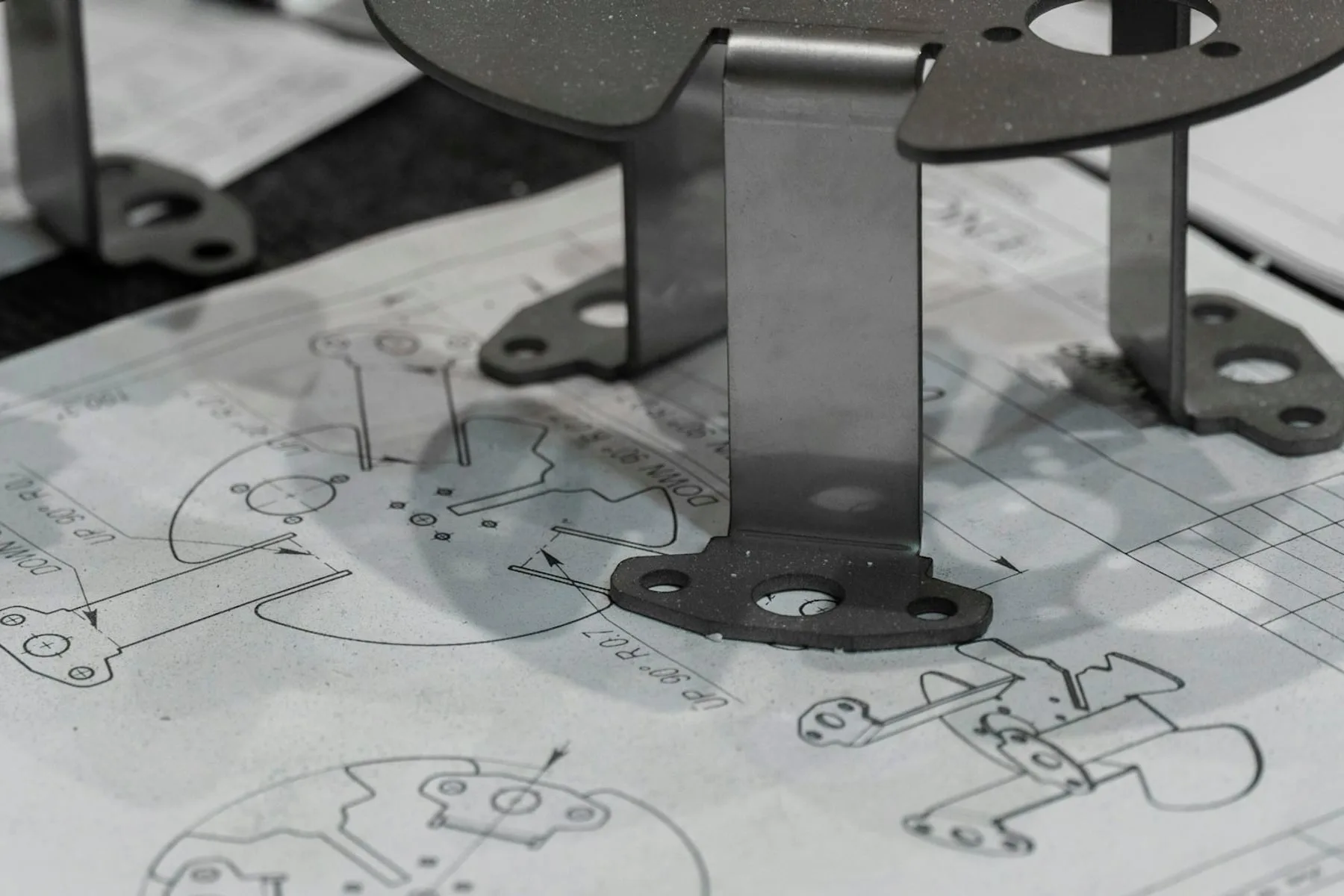
Patent data is applications, claims and citations. Its defining property is that the claims are a legal instrument rather than prose: the claim defines the scope of the monopoly, and its structure is what the document is for.
The language is dense and rigidly formatted, with terminology consistent within a document and idiosyncratic across them. General-purpose models handle it poorly, which is why dedicated structuring work is required rather than assumed.
The uses are patent search, technology trend analysis and infringement risk detection. The first needs claim parsing and classification, the second needs the citation network and dates, and the third needs claim structure at a granularity that supports element-by-element comparison.
What buyers get wrong
Patent text is extremely dense with terminology and rigidly formatted; general-purpose models handle it poorly, so dedicated structuring work is required.
The specification detail that decides everything
Whether claim structure parsing and a patent citation network are included.
This is the line item that most often separates a dataset that works from one that gets re-ordered. It belongs in the specification before production starts, not in the delivery review.
How we source it
We do not hold inventory in this category. A requirement comes in, we match it to a producer who can meet the specification, and we agree the quality bar with both sides before recording begins. A pilot batch goes first so misalignments surface early.
Scenarios this covers
Buyers rarely ask for a category by name. They describe a situation, and the situation is what tells us whether this category is the right one. If yours is in the list, name it in the brief and it goes straight into the specification. If it is not, describe it anyway, because it usually means the requirement sits in a neighbouring category.
What good Patent Data looks like
Patent data is judged on whether the claim structure was parsed, because that is what distinguishes a patent corpus from a text corpus.
-
Claim structure parsed into independent and dependent claims
Which claims depend on which, because the dependency structure determines scope.
-
Claim elements separated
The individual limitations within a claim, since infringement analysis compares element by element and a claim left as a paragraph cannot be compared.
-
Citation network included, with direction recorded
Which patents cite which, and whether the citation was added by the applicant or the examiner.
-
Bibliographic fields complete
Priority date, filing date, grant date and assignee, because the dates determine what prior art exists.
-
Classification codes attached
The patent classification, since it is the standard way patent corpora are filtered by technology area.
Public datasets in this category
These are openly documented resources, not products we sell. Each one covers part of the category, and knowing where each stops is usually what decides whether a project needs a collection of its own.
-
USPTO Bulk Data
The official bulk distribution of US patent grants and applications, with full text and citations. Authoritative and free, and the format is raw XML that requires substantial parsing work.
-
EPO Open Patent Services
Programmatic access to European patent data including bibliographic and citation records. It is an API rather than a bulk dump, with rate limits and terms that apply to commercial use.
-
Google Patents Public Datasets
Patent data hosted for querying on a public cloud platform, including parsed claims and citations. Convenient and the parsing quality varies, so it is worth verifying against the source.
-
BigPatent
A summarisation corpus of US patent documents with human-written abstracts. Built for a specific task and useful mainly for that.
Questions to ask a supplier
Questions that establish whether the claims were parsed or merely extracted.
- Is claim structure parsed into independent and dependent claims?
- Are individual claim elements separated?
- Is the citation network included, with direction and citation type?
- Are bibliographic fields complete, including priority and filing dates?
- Are classification codes attached?
The vague answer in this category is about the claims. A supplier who says the corpus contains patent text without saying whether the claims were parsed into their structure has described a document collection rather than a patent corpus. The claim is the legal instrument, and its internal structure determines scope.
A verifiable answer names the offices covered, the document types, the treatment of citations by direction and by party, and the date fields that were preserved. Ask for the date fields specifically, because priority, filing, publication and grant dates are all distinct and all matter.
Technical attributes
The items below are the ones a specification can hold a producer to, and the ones that decide whether a delivery is usable for training rather than only present.
| Claim parsing | Independent and dependent claims separated |
|---|---|
| Claim elements | Individually segmented |
| Citation network | Included, with direction and type |
| Bibliographic fields | Priority, filing and grant dates, assignee |
| Classification | Patent classification codes attached |
| Delivery format | Structured records with a schema and a citation index |
The claim structure column decides whether the corpus supports infringement work, and it is the one most often flattened into paragraphs. A claim delivered as a paragraph cannot be analysed for its independent and dependent parts. Re-parsing afterwards is a full project, and it requires the original formatting.
The values come from the task. Prior-art search, freedom-to-operate analysis and technology landscape mapping need different citation treatments and different date fields. The specification should name the task, because the three read the same documents differently.
A mistake here is measured as a wrong date or a merged citation list. A corpus with a single date field cannot establish what prior art existed at a given filing, and a merged citation list cannot distinguish what the applicant cited from what the examiner found. Both errors invalidate the analysis built on them.
How Patent Data is collected
The parsing is the work, and the claim structure is where it is concentrated.
- Jurisdiction and date range scoping. Which patent offices and which date range, because the filing rules and document formats differ by office.
- Document acquisition and rights review. Where the documents come from and under what terms, established before the parsing work begins.
- Claim parsing. Claims are segmented into independent and dependent claims and then into individual elements, with the dependency structure recorded.
- Citation extraction. Citations are extracted and typed by origin, since an applicant citation and an examiner citation mean different things.
- Classification and validation. Classification codes are attached and a sample of the parsed claims is checked against the source documents.
After assembly, claims are parsed into their structure, citations are separated by direction and party, dates are kept as distinct fields, and the files are packaged with per-document metadata covering the office and the document type. The citation separation is the step that makes the corpus usable for prior-art work.
The pilot for patent material is a set of documents from one office with the claims parsed into their structure and the citations separated by direction. Its purpose is to confirm that the claim structure and the distinct date fields survive, because a claim delivered as a paragraph cannot be analysed for its independent and dependent parts and re-parsing requires the original formatting.
Acceptance is checked on the parsed claim structure, the separated citation lists and the distinct date fields, all verified before the batch is accepted. The specification should name the offices and the task before assembly starts, because prior-art search and freedom-to-operate work read the same documents differently. Where the pilot shows the claims are flat, the parsing is redone rather than the corpus accepted.
How a delivery goes wrong
The defects below are the ones that recur across this category. Each is decided at collection or annotation time, which is why none of them can be repaired in delivery review.
-
Claims were extracted as paragraphs
The claim is the legal instrument and its internal structure determines scope. Delivered as a paragraph it cannot support infringement analysis, and re-parsing afterwards is a full project.
-
Citation direction was lost
Backward and forward citations answer different questions, and applicant and examiner citations mean different things. A merged citation list cannot be used for prior-art work.
-
Dates were reduced to one
Priority, filing, publication and grant dates are all distinct and all matter. A corpus with a single date field cannot determine what prior art existed at a given filing.
Why this matters to buyers
Infringement analysis works element by element. A claim that has been extracted as a paragraph cannot support it, which is why the parsing is the product rather than a formatting step.
The second driver is prior art search. The dates and the citation network are what establish what existed before a given filing, and a corpus without them cannot support the search even if it contains every document.
A patent model built on flattened claims cannot answer the questions the product was built for. Scope questions require the claim structure, and that structure is not recoverable from the delivered text. The corpus has to be rebuilt from the source documents, which costs as much as the original assembly.
The second cost is date accuracy. A corpus with merged dates produces analyses that are wrong in ways that look plausible, and in patent work a plausible wrong answer is more dangerous than an obvious gap. Correcting it means going back to the offices, which is slow and may not be possible for older records.
A patent corpus with parsed claims and separated citations gives analyses that hold up. Scope questions can be answered from the claim structure, and prior art can be established against the filing date rather than against a merged date field.
The second gain is that the corpus supports more than one task. Prior-art search, freedom-to-operate analysis and landscape mapping use the same documents, and a delivery that separated the citation directions serves all three. That record is what makes the corpus reusable across a legal team.
Specification at a glance
| Category | Patent Data |
|---|---|
| Group | Non-speech data |
| Critical spec | Whether claim structure parsing and a patent citation network are included. |
| Included by default | Pilot batch, metadata schema, source and consent documentation |
| Pricing | Quoted from specification. No published rates |
Related categories
-
LLM Training Data
Text corpora for LLM pretraining and fine-tuning: instruction data, preference data, and multi-turn dialogue data.
-
Computer Vision Data
Annotated image and video data, with annotation types including classification, bounding boxes, segmentation masks, and keypoints.
-
NLP Data
Annotated text for NLP tasks: named entities, dependency syntax, sentiment polarity, and relation extraction.
-
Multilingual Language Data
Parallel or non-parallel text corpora spanning multiple languages, used for multilingual models and low-resource language research.
-
Translation Data
Parallel corpora pairing source and target language, used for machine translation training and evaluation.
-
Dictionary Data
Structured dictionary entries with definitions, parts of speech, pronunciation, and example sentences, used for dictionary products and lexical understanding tasks.
Questions about Patent Data
Why is claim parsing the core of patent data?
Because a claim is a legal instrument with internal structure, and that structure determines scope. A patent corpus without parsed claims is a text corpus that happens to contain patents.
Why record the citation type?
Because applicant citations and examiner citations mean different things. An examiner citation is a prior-art objection; an applicant citation may be a defensive disclosure. A network that merges them answers a different question.
Are classification codes necessary?
They are the standard way patent corpora are filtered by technology area. Without them, selecting a technology area requires text search, which is less precise and less reproducible.
How is parsing accuracy checked?
By sampling parsed claims and comparing against the source documents, with the error rate reported. Claim language is idiosyncratic, and parsing errors concentrate in the unusual phrasings.
Do you have Patent Data available now?
No. We do not hold inventory. Everything is produced against a specification. That means the timeline starts when the spec is agreed rather than immediately, and it also means the data matches your requirement instead of approximately matching something already built.
Can this be combined with other categories in one delivery?
Yes, and it is common. A single specification can cover several categories across several languages, with one pilot batch and one quality bar. It usually reduces total cost because contributor recruitment and project setup are shared.
What does the consent documentation cover?
Signed contributor consent stating the intended use, the collection methodology, and the annotation guideline the data was produced under. For projects involving EU data subjects the chain is built to satisfy GDPR, including the transfer mechanism. The terms for moving the data across a border.
Request Patent Data
Tell us the language, the hours, and what the data needs to look like. You will get a real number and a real timeline, not a range. If we cannot source it well, we will tell you that instead.
- Pilot batch before the full run, so problems surface early.
- Consent documentation delivered with the data.
- No medical or clinical data. No recorded telephone calls.
- You send the spec Language, hours, recording conditions, and the deadline.
- We reply within two business days A real number and a real timeline, not a range.
- You approve a pilot batch A small run first, so problems surface before the full order.
- Full run, then delivery with documents Audio, transcripts, and the consent record for every speaker.