What is Teleoperation?
A human drives the robot directly, and the robot's motion is recorded as a training demonstration.
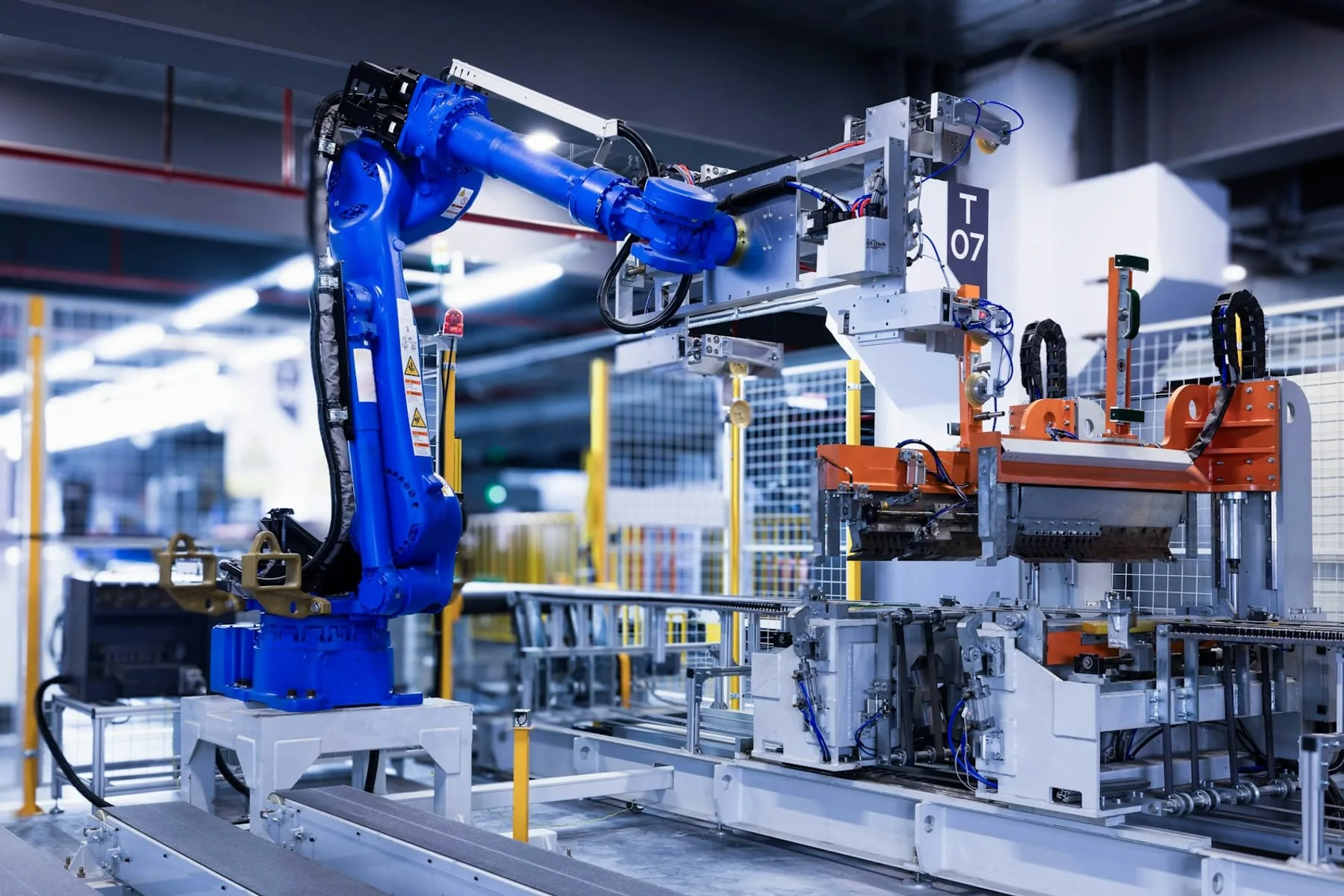
The common rigs are leader-follower: a smaller duplicate arm that the operator moves by hand while the robot mirrors it. ALOHA is the standard low-cost example. A pair of servo arms driven by matching leader arms, recording both arms, three cameras and the joint states at 50 Hz. VR controllers and 3D mice are the alternatives; they are cheaper and work at a distance, but give the operator less sense of contact.
Throughput sets the cost. A practiced operator on a tabletop rig records on the order of 20 to 30 episodes an hour, and a failed attempt still consumes the operator's time plus the reset after it. Scaled collection in Chinese training facilities costs far less per hour of effective data; small-batch collection on research hardware with an engineer operating costs several times more.
Teleoperation breaks down in three places: latency, which destroys the operator's sense of contact; tasks that need force feedback the rig does not provide; and anything repetitive enough that a scripted or simulated policy would produce the same data for less. It stays the default for fine manipulation because no other method captures the small corrections (the wiggle that seats a connector), that make a demonstration teachable. Collection is commissioned per task rather than sold as a fixed product, because the rig, the objects and the resets are different every time.
Types of teleoperation rigs
The standard rig pairs a robot arm with a smaller leader arm, and the operator moves the leader while the robot follows. It is the choice for fine manipulation, because the operator keeps a sense of contact through the leader arm, and small corrections become part of the recording rather than lost between them. The cost is a leader arm per follower and regular calibration.
Controller-based rigs are the alternative. VR controllers, 3D mice and handheld devices are cheaper, work at a distance and need no duplicate arm, but the operator feels nothing, so force-sensitive tasks suffer. Gloves and hand-tracking rigs extend the same idea to the fingers for dexterous hands, trading contact feedback for portability. Each rig changes what the operator can feel, and therefore what the demonstrations contain.
A third variation is the feedback the rig provides. Some add force feedback at the leader arm, some add stereo vision for depth, and some add neither and rely on the operator's eyes. What the rig cannot convey is what the operator cannot demonstrate well, so the feedback set belongs in the dataset description next to the rig model.
What to specify when buying
The brief should describe the reset cost of the task, because that is what decides the usable throughput. An episode ends when the task ends or fails, and the operator's time produces data only while the robot is running. Tasks that reset themselves, or that can be attempted repeatedly without clearing the scene, produce far more usable episodes per hour than ones needing a full reset after every attempt.
State the task list and the target platform. Collection runs on the hardware that will run the policy wherever possible; if demonstrations are recorded on a different arm or hand, retargeting has to be specified, and the rig's joint layout becomes part of the deliverable. Say whether force feedback matters for your tasks, because that decides which rigs are acceptable.
Decide what happens to failures before recording starts. A failed attempt costs the same operator time as a successful one and is often the more informative episode, but it needs a label to be useful and it inflates the raw episode count. Say whether the set is successful episodes only or every attempt with a success verdict, and expect the cost per useful episode to differ between the two.
Related terms
-
Robot Manipulation Data
Episodes of a robot arm moving objects, recorded together with the commands that produced the motion.
-
Humanoid Robot Data
Whole-body demonstrations and sensor logs from robots with legs and arms, where balance is part of every task.
-
Motion Capture Data
Human body motion recorded as joint trajectories, used for animation and as a reference for robots that imitate people.
Keep reading
-
Full glossary
Every term we explain, in one list.
-
How to buy training data
Where these terms actually show up, and which ones change a quote.
-
Help center
How a project runs, from specification to delivery.
Submit a sourcing request
Tell us the language, the hours, and what the data needs to look like. You will get a real number and a real timeline, not a range. If we cannot source it well, we will tell you that instead.
- Pilot batch before the full run, so problems surface early.
- Consent documentation delivered with the data.
- No medical or clinical data. No recorded telephone calls.
- You send the spec Language, hours, recording conditions, and the deadline.
- We reply within two business days A real number and a real timeline, not a range.
- You approve a pilot batch A small run first, so problems surface before the full order.
- Full run, then delivery with documents Audio, transcripts, and the consent record for every speaker.