Swahili Speech Data: Kenya, Tanzania and the Dialect Question
Swahili speech recorded in Nairobi and in Dar es Salaam is not the same product. Here is what differs, and what a buyer has to decide before commissioning a Swahili speech dataset.
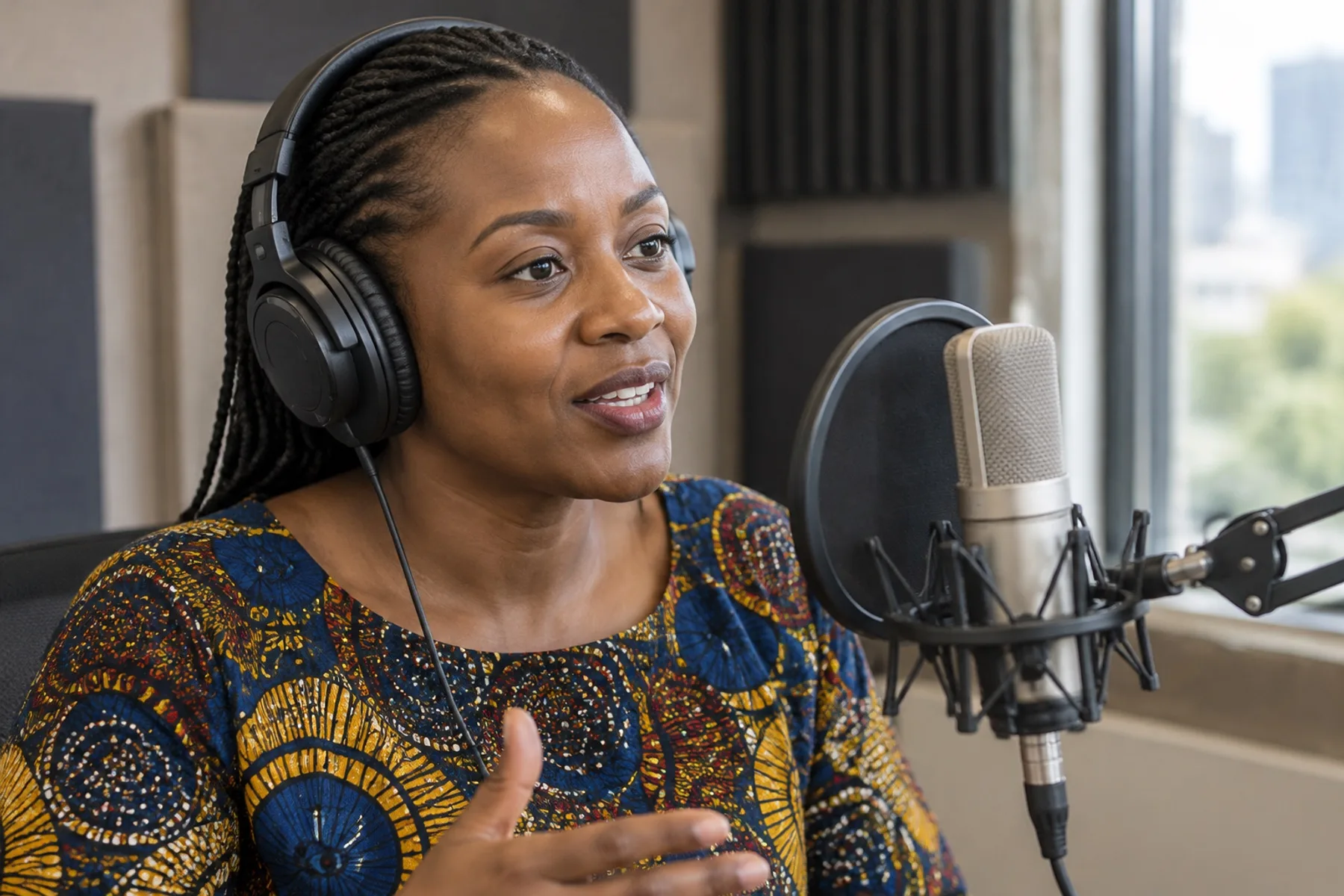
Swahili is spoken across East Africa, and the two largest markets, Kenya and Tanzania, do not produce identical speech. A Swahili speech dataset commissioned without a country and a dialect is ambiguous in the same way a "Portuguese" dataset would be ambiguous between Portugal and Brazil.
The language itself is not the problem. Swahili is well documented and widely written. The problem is that the speakers a buyer needs depend on where the product will be sold.
Kenya and Tanzania differ in more than accent
Standard Swahili is taught in both countries, but everyday speech diverges. Coastal varieties in Kenya, around Mombasa and Malindi, carry more Arabic influence in vocabulary and pronunciation than inland varieties around Nairobi. Tanzanian Swahili, centred on Dar es Salaam and Zanzibar, has its own vocabulary preferences and a strong coastal character.
A corpus recorded entirely in Nairobi will not represent a Dar es Salaam user, and the reverse is also true. The country and the region have to be recorded per speaker, so a buyer can later subset the corpus to the market being served.
English mixes in, and the amount depends on the setting
Swahili-English code-switching is common in professional and urban settings in Kenya, and less so in rural and coastal conversation. A customer-service corpus recorded in Nairobi will contain far more English than the same job recorded in Mwanza.
The mixing convention has to be written down. A transcript that cleans English words into Swahili no longer matches the audio; one that keeps them needs a consistent rule for how they are marked. Annotators without a rule will each invent their own.
Arabic loanwords create orthographic variants
Swahili has borrowed heavily from Arabic, and a number of loanwords have more than one accepted spelling. Coastal and Zanzibar speech uses more of this vocabulary, and transcribers themselves differ on the preferred form.
The specification should name the orthographic reference being used and require that it be applied consistently. A corpus where the same word appears in two spellings teaches a model that both exist, which is only correct if the buyer wants that.
Checklist before commissioning Swahili speech
- Country and region per speaker: Kenya, Tanzania, and the city or province.
- Coastal versus inland variety, stated explicitly.
- Code-switching convention for English words.
- Orthographic reference for Arabic loanwords, applied consistently.
- Reading versus spontaneous speech, since the two differ sharply in formality.
- Acceptance check per country, not only on the pooled dataset.
The decision that matters is which country and which variety, not how many hours. A pool of a thousand hours drawn from the wrong coast is less useful than two hundred hours from the market the product serves.
For related pages, see Swahili, the conversational speech category, the full dataset briefs, and the technical reference.
Questions buyers ask
Is Kenyan and Tanzanian Swahili the same for training?
They share a standard but differ in everyday vocabulary and pronunciation. If the product serves one country, a corpus recorded in the other will underrepresent it; record the country per speaker so the corpus can be subset later.
Should English words in Swahili speech be transcribed?
They should be transcribed according to a written rule. Removing them produces text that does not match the audio; keeping them without a rule produces inconsistent transcripts.
Why do Arabic loanwords cause problems in Swahili datasets?
Because several loanwords have more than one accepted spelling, and the choice varies by region and by transcriber. Naming an orthographic reference and applying it consistently keeps the text layer coherent.
Read speech or spontaneous speech for Swahili?
They answer different needs. Read speech is cleaner and easier to align; spontaneous speech reflects how people actually talk. The specification should say which one the model will meet in production.