What is DROID Dataset?
A large in-the-wild robot manipulation dataset collected by a multi-lab consortium, notable for scene diversity rather than task repetition.
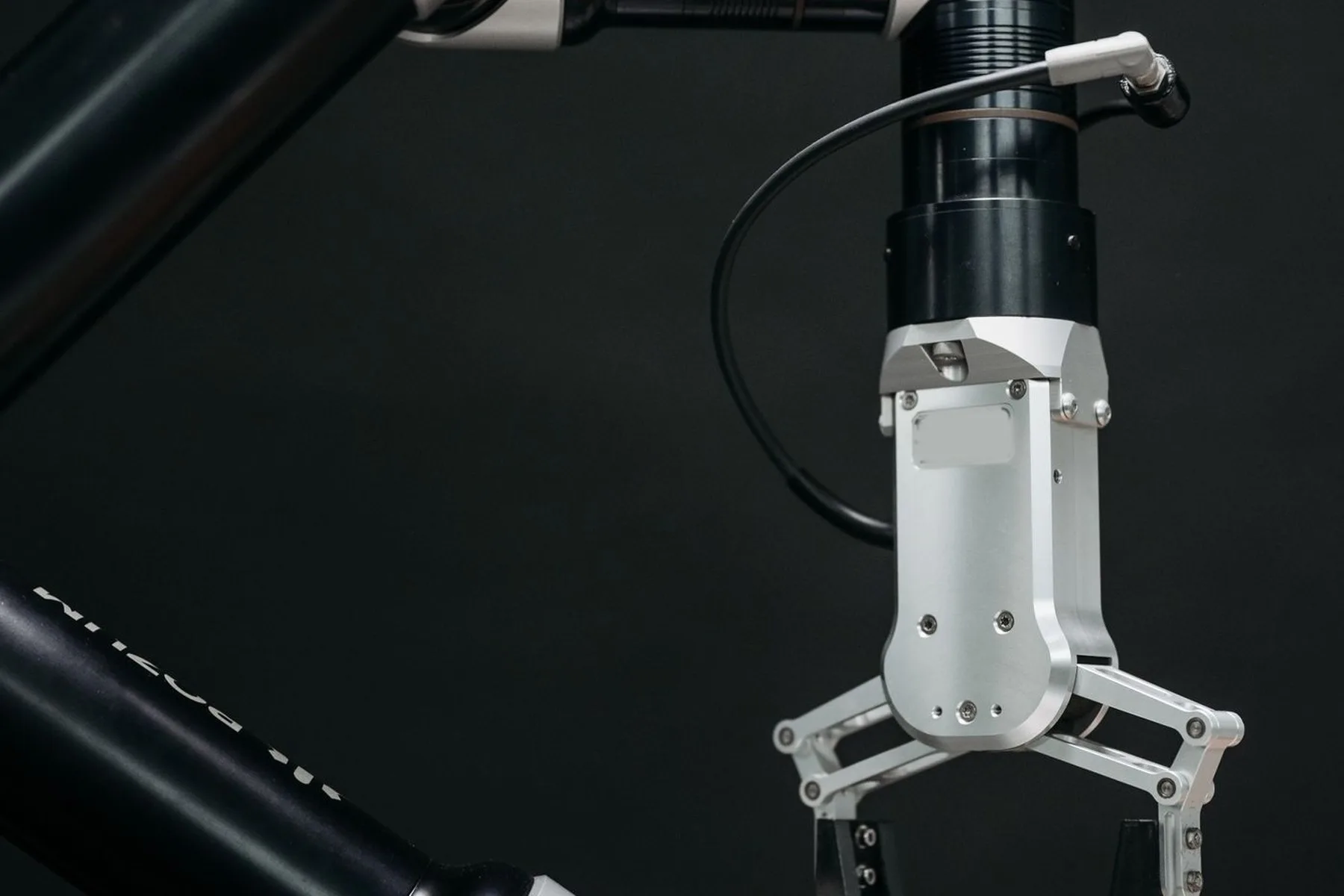
DROID (Distributed Robot Interaction Dataset), was assembled by a consortium of 13 university labs and released in 2024. The hardware is a Franka Panda arm mounted on a rolling cart, which is what let one rig move between locations: roughly 76,000 trajectories, about 350 hours, spread across 564 scenes in 52 buildings. The task list is deliberately broad rather than deep (on the order of 86 task types), with each location contributing its own objects and its own layout.
Each episode carries four camera streams, two mounted on the wrists and two stereo cameras on the cart, plus three natural-language instructions written independently by different annotators. That three-annotation design is unusual and deliberate: it gives the same episode several valid phrasings, which is what a model needs in order to learn that "pick up the cup" and "grasp the mug" describe the same behavior. Distribution is in RLDS, the same format that carries Open X-Embodiment.
What DROID is for is scene and object diversity. A single-lab dataset teaches one kitchen; DROID teaches that kitchens differ. If the problem you have is that a policy works in your test room and fails everywhere else, that is the gap this kind of set targets, and the practical question about any in-the-wild collection is not how many hours it holds but how many distinct scenes and objects those hours are spread across.
What DROID contains
An episode here has the shape of any manipulation episode: camera frames, arm and gripper state, and the action that was commanded, all aligned on one clock. What distinguishes the collection is how the episodes are spread. Rather than many hours in one room, the data covers many scenes and many objects, so the variation a policy sees comes from the environment rather than from repetition of a single task.
The language layer is worth a look on its own. Each episode carries more than one instruction, written independently by different annotators. That redundancy is deliberate: it gives a model several valid phrasings of the same behavior, which is how it learns that two different sentences can mean the same action. One phrasing per episode teaches a narrower mapping from language to behavior.
Delivery is in RLDS, the shared format that also carries Open X-Embodiment, so the buyer should read the format documentation rather than assume every detail of the original capture survived. What is documented, and what is not, is a fair question to put to anyone assembling a comparable set.
What to check before using it
DROID is public material rather than something you commission, so the buyer questions are different. Does its scene coverage overlap with yours, and does its instruction style match what your model will hear at deployment? A set gathered across many buildings is strong evidence for a policy that has to generalize, and thin evidence for anything specific to one gripper or one object family.
Read the terms attached to the release before training anything commercial on it. A public release is not automatically a permissive licence, and the conditions that matter (commercial use, redistribution of derivatives, attribution) live in the terms, not in the paper that introduced the dataset.
If you are specifying your own collection instead, this kind of set is a useful template. It shows what an in-the-wild program looks like: one platform, many sites, a broad task list, one annotation convention throughout. The specification line that matters in that quote is the scene and object count, not the hour count.
Related terms
-
Open X-Embodiment
A pooled collection of robot datasets spanning 22 different robot embodiments, built to test whether data from one robot helps another.
-
Robot Manipulation Data
Episodes of a robot arm moving objects, recorded together with the commands that produced the motion.
-
Vision-Language-Action Model
A model that takes camera images and a written or spoken instruction and outputs robot actions directly.
Keep reading
-
Full glossary
Every term we explain, in one list.
-
How to buy training data
Where these terms actually show up, and which ones change a quote.
-
Help center
How a project runs, from specification to delivery.
Submit a sourcing request
Tell us the language, the hours, and what the data needs to look like. You will get a real number and a real timeline, not a range. If we cannot source it well, we will tell you that instead.
- Pilot batch before the full run, so problems surface early.
- Consent documentation delivered with the data.
- No medical or clinical data. No recorded telephone calls.
- You send the spec Language, hours, recording conditions, and the deadline.
- We reply within two business days A real number and a real timeline, not a range.
- You approve a pilot batch A small run first, so problems surface before the full order.
- Full run, then delivery with documents Audio, transcripts, and the consent record for every speaker.