What is World Model?
A learned model that predicts how a scene will change in response to actions, used both for planning and for generating training data.
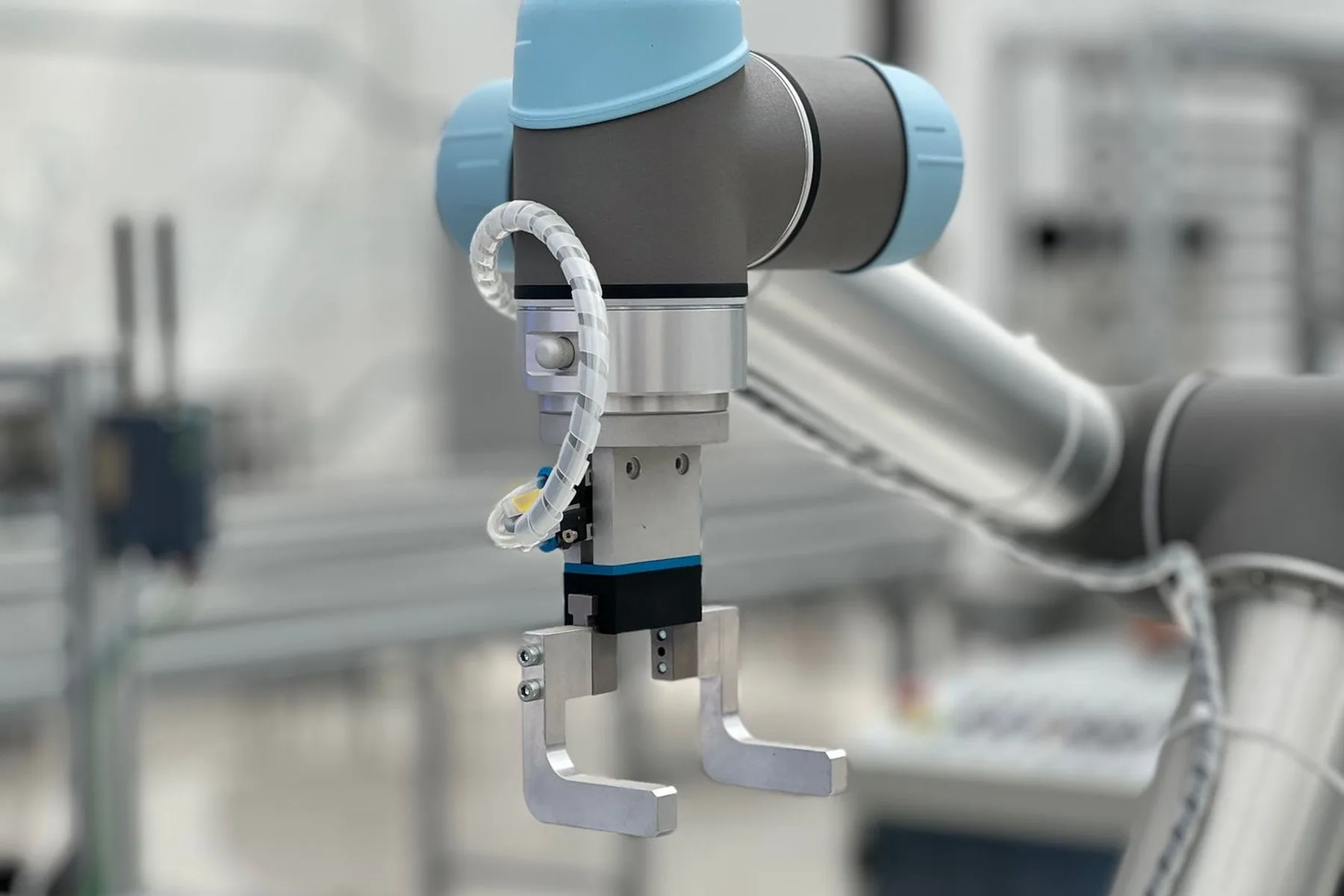
A world model predicts what happens next. Given the current state of a scene and a proposed action, it produces the state that follows, which makes it a simulator whose physics were learned from data rather than written by hand. The distinction cuts both ways: a learned model can capture effects that are painful to code (cloth, granular material, soft contact), and it can also be confidently wrong in ways a hand-built simulator is not, because nothing inside it enforces conservation laws.
There are two quite different uses. The first is planning: roll the model forward under several candidate action sequences, pick the one whose predicted outcome is best, execute the first action, repeat. Systems in this family improve inside the model rather than in the environment, which is what lets them get better without touching hardware. The second use is generation: running the model to produce synthetic episodes, including failure cases on demand, to augment a real dataset. Recent work pushes this toward video-pretrained models that predict future frames, and toward general-purpose world foundation models pitched as simulators for physical AI.
For a data buyer the useful framing is that a world model is both a consumer and a producer of the same thing you are buying. As a consumer it wants the coverage a policy wants: diverse scenes, varied outcomes, and enough failure data to learn what going wrong looks like. As a producer it competes with the data you were about to commission, and the honest test is the one that applies to simulation generally, if the failure mode you care about is contact or force, a learned model inherits the weakness a hand-built simulator has, and real data stays the product. If it is visual variation or navigation, generated episodes are cheap and may be enough.
Kinds of world model
The first split is what the model predicts. Some predict compact state: joint angles, poses, object positions. These are cheap to run and directly usable by a controller, but they carry no appearance. Others predict pixels and generate future frames, which allows training on ordinary video but needs a further step to turn images back into actions. A third family predicts inside a learned compressed representation.
The second split is what the model was trained on. Video-pretrained models learn motion and appearance from ordinary recordings, which gives breadth but no action labels. Models trained on robot episodes learn the link from action to consequence, but only for the platforms in that data. Combining the two, pretraining on video and adapting on robot data, is the usual pattern.
The third split is scope. A model of one task or one scene is a component, and its predictions are only valid inside that setting. A model that claims generality across scenes and robot bodies is a different proposition, and the claim is what to interrogate: generality in the model does not remove the need for data that grounds its predictions on your hardware.
What to specify when buying
If the data is being bought to train a world model, the specification differs from a policy dataset in one main respect: continuity. A world model learns transitions, so long uninterrupted trajectories carry information that clipped episodes lose. The brief should state how long sequences must run, and whether the camera and state streams are unbroken throughout each one.
If a supplier is selling episodes generated by their own world model, ask what that model was trained on and what rights they hold over the material. The rights position of generated output is bounded by the rights position of the training data, so this belongs in writing before payment, and the answer should name sources rather than describe them generally.
Judge generated data by what it trains, not by how it looks. Render quality says little about whether the physics are right, and the useful test is training a policy on the generated episodes and evaluating it on real hardware against a policy trained on real data. Also fix how many steps deep generation may run, because a model rolled forward accumulates its own error and drifts away from anything physical.
Related terms
-
Sim-to-Real Transfer
Training a policy in simulation and getting it to work on physical hardware, across the gap between the two.
-
Imitation Learning
Teaching a policy by showing it demonstrations rather than by scoring its attempts, which is why demonstration data is the input it needs.
-
Robot Data Augmentation
Generating additional training episodes from existing ones by transforming images, goals or scene configurations.
Keep reading
-
Full glossary
Every term we explain, in one list.
-
How to buy training data
Where these terms actually show up, and which ones change a quote.
-
Help center
How a project runs, from specification to delivery.
Submit a sourcing request
Tell us the language, the hours, and what the data needs to look like. You will get a real number and a real timeline, not a range. If we cannot source it well, we will tell you that instead.
- Pilot batch before the full run, so problems surface early.
- Consent documentation delivered with the data.
- No medical or clinical data. No recorded telephone calls.
- You send the spec Language, hours, recording conditions, and the deadline.
- We reply within two business days A real number and a real timeline, not a range.
- You approve a pilot batch A small run first, so problems surface before the full order.
- Full run, then delivery with documents Audio, transcripts, and the consent record for every speaker.