What is Grasping Data?
Images, depth maps or point clouds of objects, annotated with the gripper poses that would pick each one up.
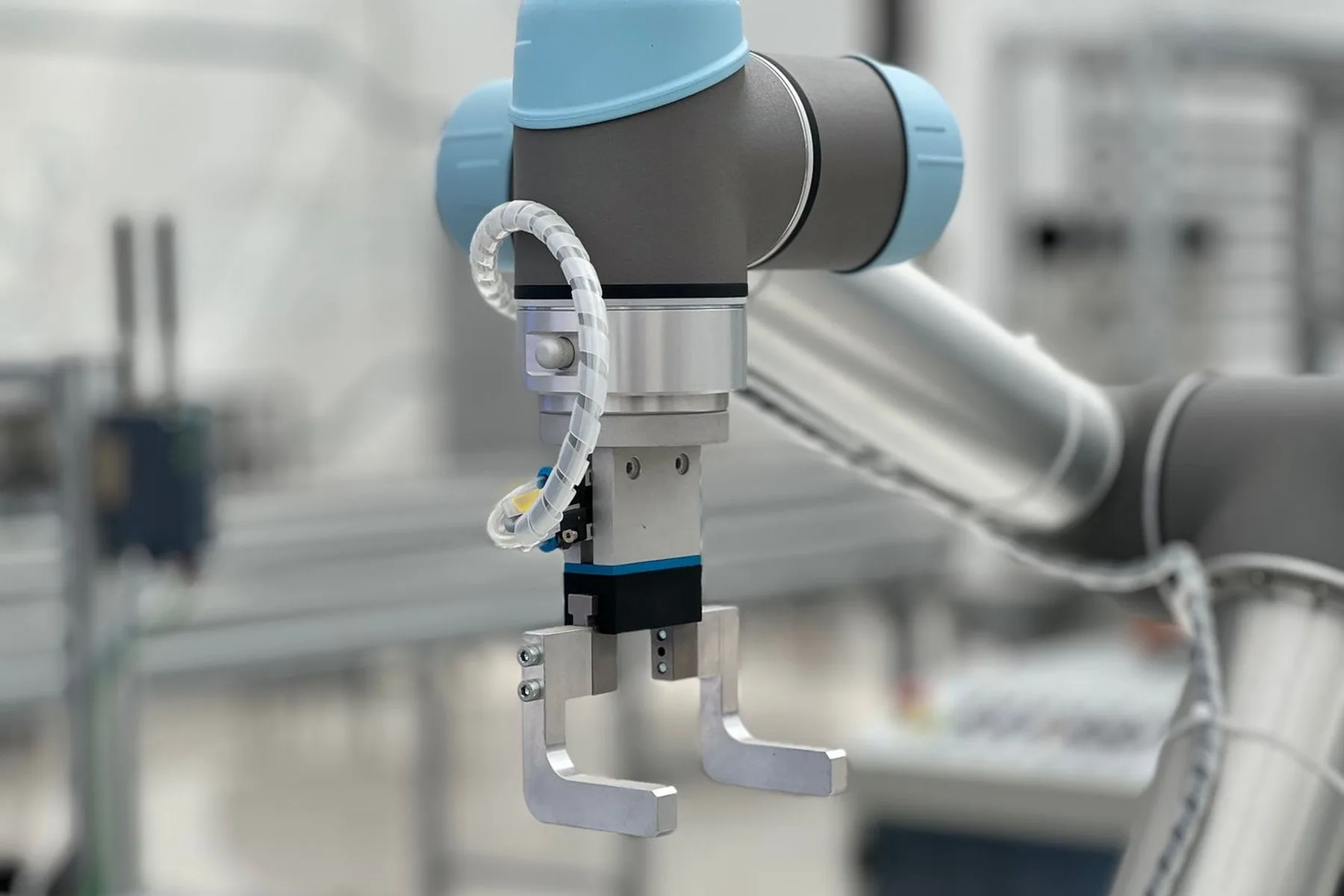
A grasp label is a pose, not a bounding box: where the gripper should sit, at what angle, and how wide it must open. The classic academic set, Cornell, is small and still used as a benchmark: 885 RGB-D images of 240 objects at 640 by 480, labeled with roughly 5,100 positive grasp rectangles and 2,900 negative ones. Jacquard is the synthetic counterpart: more than 54,000 generated images with grasp points and poses.
The geometry underneath is force closure. A grasp that resists disturbance because its contact forces oppose each other. An antipodal two-finger grasp is the simple case: contact on opposite sides, along the line between the fingers. Datasets label which candidate poses satisfy this, which is why they are paired with depth or point clouds rather than RGB alone.
The failure that matters is not a failed pick but a delayed one. A grasp that looks successful and slips two seconds later. That is why a usable grasp set records the outcome and defines a hold period, not just the pose. Public sets cover tabletop objects and two-finger grippers; a gripper or object family they do not cover can be collected to order, and the narrow scope usually makes these projects faster than a full manipulation program.
Forms of grasp annotation
The simplest label is a grasp rectangle drawn on the image: a position, an angle and a width, enough for a two-finger gripper approaching from the camera's direction. A full pose is the richer form. It fixes the gripper in three dimensions, which is what a wrist free to rotate needs. Point-cloud sets label contact points or antipodal pairs instead of a rectangle.
Labels also come in two signs. Positive candidates are poses the gripper can take; negatives are the ones it cannot, because the object is too wide, the approach is blocked, or the pose drives into the table. A set of positives alone teaches where to grasp but not what to reject, and rejection is what a policy does most of the time.
The third variation is the gripper the labels were written for. Parallel-jaw labels describe a pose and a width. Suction labels describe a sealable surface patch and an approach direction. Multi-finger labels stop being a single pose at all and become a hand configuration. A label written for one family transfers poorly to another, so the gripper belongs in the dataset description, not the fine print.
What to specify when buying
Name the gripper first, with its stroke and finger geometry. A pose that works depends on the tool, and a set collected on a two-finger gripper is not a drop-in for a suction head or a three-finger hand. If the target gripper is not the one in the public sets, the data has to be collected on it, and saying so up front is what keeps the quote honest.
The object list is the next item. Tabletop objects are the easy case; bin picking, packed shelves and cluttered surfaces change both the label work and the difficulty. Size, mass, material and surface friction all belong in the brief, because a grasp that holds a box may slip on glass. If the objects are the buyer's own parts, photographs and samples beat a written description.
Finally, define success. The label describes an instant, but the policy learns from the result, so the set needs a hold period and an outcome record, not just poses. State whether failed attempts are kept, whether the deliverable is labels alone or labels with episodes, and whether the policy wants one best pose or a ranked list of candidates.
Related terms
-
Robot Gripper Data
Episodes and signals tied to the end effector, including width, force, vacuum pressure and whether the grasp held.
-
Robot Manipulation Data
Episodes of a robot arm moving objects, recorded together with the commands that produced the motion.
-
Tactile Sensor Data
Contact measurements from a robot's fingertips or skin, covering pressure, force and, in optical sensors, images of the contact itself.
Keep reading
-
Full glossary
Every term we explain, in one list.
-
How to buy training data
Where these terms actually show up, and which ones change a quote.
-
Help center
How a project runs, from specification to delivery.
Submit a sourcing request
Tell us the language, the hours, and what the data needs to look like. You will get a real number and a real timeline, not a range. If we cannot source it well, we will tell you that instead.
- Pilot batch before the full run, so problems surface early.
- Consent documentation delivered with the data.
- No medical or clinical data. No recorded telephone calls.
- You send the spec Language, hours, recording conditions, and the deadline.
- We reply within two business days A real number and a real timeline, not a range.
- You approve a pilot batch A small run first, so problems surface before the full order.
- Full run, then delivery with documents Audio, transcripts, and the consent record for every speaker.