What is Robot Gripper Data?
Episodes and signals tied to the end effector, including width, force, vacuum pressure and whether the grasp held.
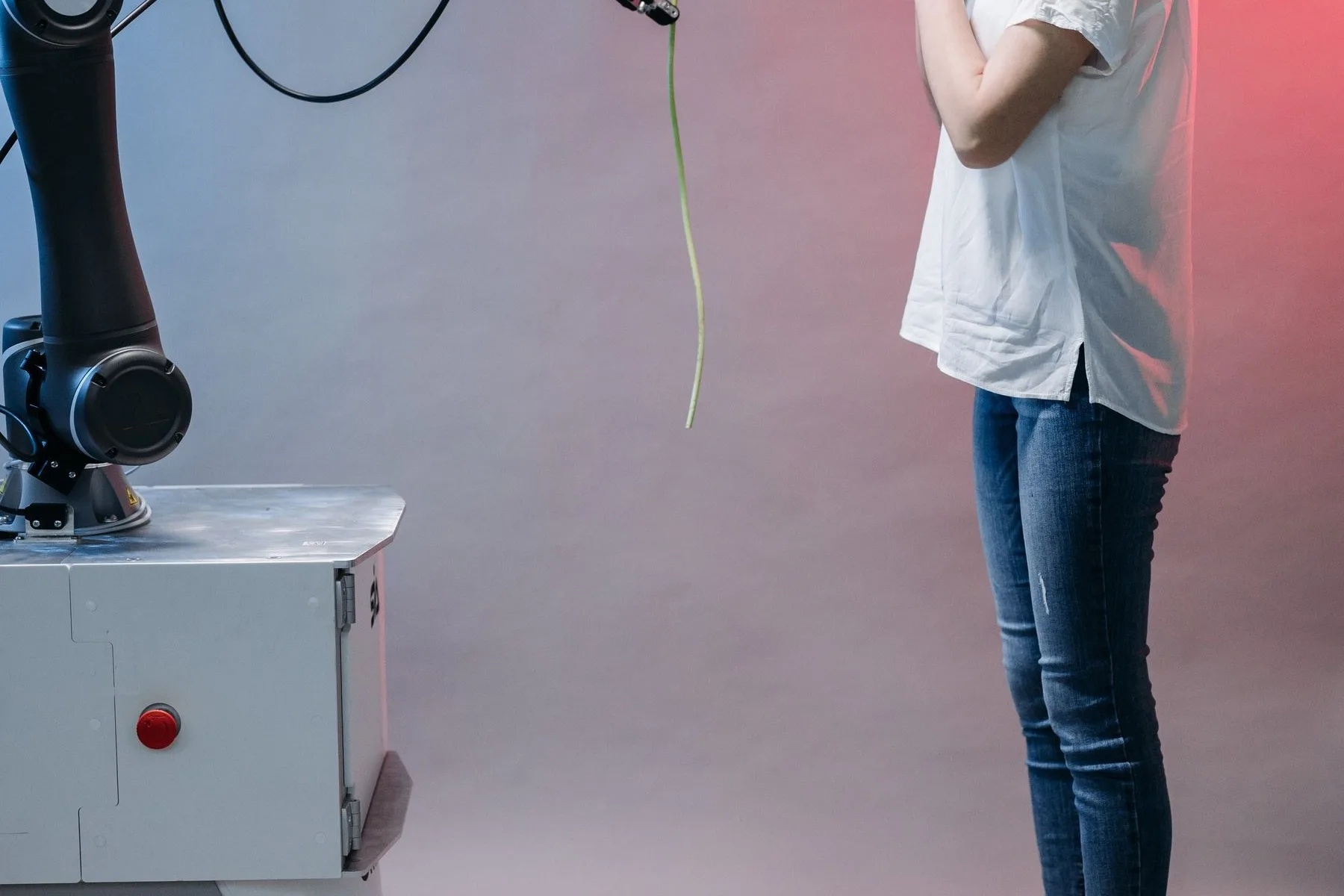
The gripper decides what the data can teach, and the categories differ enough that sets rarely transfer between them. Parallel-jaw electric grippers (the Robotiq 2F-85, whose name states its 85 mm stroke, is the common one), record width and force. Vacuum grippers record pressure and seal events, a different kind of signal: a suction cup either seals or it does not, and the failure is silent. Soft grippers deform, so their true state is only partly observable from commanded position.
Two practical complications. First, the gripper occludes the camera exactly where the grasp happens; a wrist-mounted camera sees the approach, not the contact, which is why gripper data is often fused with force or tactile sensing rather than vision alone. Second, the grasp moment is a spike, not a steady state: success is decided in the tens of milliseconds around contact, so sampling rate near that moment matters more than total episode length.
Because stroke, force range and finger geometry all change the pose that works, gripper-specific data is scoped around the tool. It can be commissioned to order with the gripper named in the brief: including projects where the client ships the gripper to the collection site so the demonstrations are recorded on the exact hardware that will run the policy.
Kinds of gripper
Parallel-jaw electric grippers are the default, and the name states the geometry: two fingers closing on opposite faces of an object. The signals that matter are the finger opening over time and the force applied, because success shows up as a width that stops changing while force holds. Stroke and finger geometry decide which objects are reachable at all.
Vacuum grippers are a different family entirely. The signal is pressure and the seal event, not width and force, and the failure is silent: a cup that has not sealed looks exactly like one that has, until the object falls. They need a flat, non-porous surface, so an object that a two-finger gripper handles easily may be impossible for suction, and the reverse is also true.
Soft and underactuated grippers conform to the object, which is their advantage and their data problem. Commanded position no longer tells you the contact geometry, so the true state has to come from sensing: internal pressure, bending or a tactile layer. Custom end effectors built for a single product family behave like a fourth kind, and their data almost never transfers to anything else.
What to specify when buying
Name the hardware completely: the model, the stroke, the finger pads, the force limits and the control interface. Two rigs using the same gripper model with different pads produce demonstrations that do not transfer between them, because the friction and the contact geometry differ. If the gripper reports measured width or force, say which channels must be logged and at what rate.
The object set belongs in the brief as much as the gripper does. Mass, surface finish, rigidity and whether items deform all change what a grasp has to do. A gripper that handles a rigid block may fail on a bag of the same weight, and a dataset that never saw a deformable object teaches nothing about handling one. List the object families and the failure cases that matter.
Then fix the action convention. Commands recorded in raw motor units, in normalized values or as physical targets are three different datasets, and the mapping to the control interface the policy will use has to be documented. If you are shipping your own gripper to a collection site, send the pads and the calibration with it, and require the rig to be set up to match your deployment.
Related terms
-
Grasping Data
Images, depth maps or point clouds of objects, annotated with the gripper poses that would pick each one up.
-
Tactile Sensor Data
Contact measurements from a robot's fingertips or skin, covering pressure, force and, in optical sensors, images of the contact itself.
-
Dexterous Hand Data
Demonstrations for multi-fingered robot hands, including in-hand manipulation that a two-finger gripper cannot do.
Keep reading
-
Full glossary
Every term we explain, in one list.
-
How to buy training data
Where these terms actually show up, and which ones change a quote.
-
Help center
How a project runs, from specification to delivery.
Submit a sourcing request
Tell us the language, the hours, and what the data needs to look like. You will get a real number and a real timeline, not a range. If we cannot source it well, we will tell you that instead.
- Pilot batch before the full run, so problems surface early.
- Consent documentation delivered with the data.
- No medical or clinical data. No recorded telephone calls.
- You send the spec Language, hours, recording conditions, and the deadline.
- We reply within two business days A real number and a real timeline, not a range.
- You approve a pilot batch A small run first, so problems surface before the full order.
- Full run, then delivery with documents Audio, transcripts, and the consent record for every speaker.