What is Warehouse Robotics Data?
Sensor and telemetry data from robots working in fulfillment centers, covering picking, moving totes and building pallets.
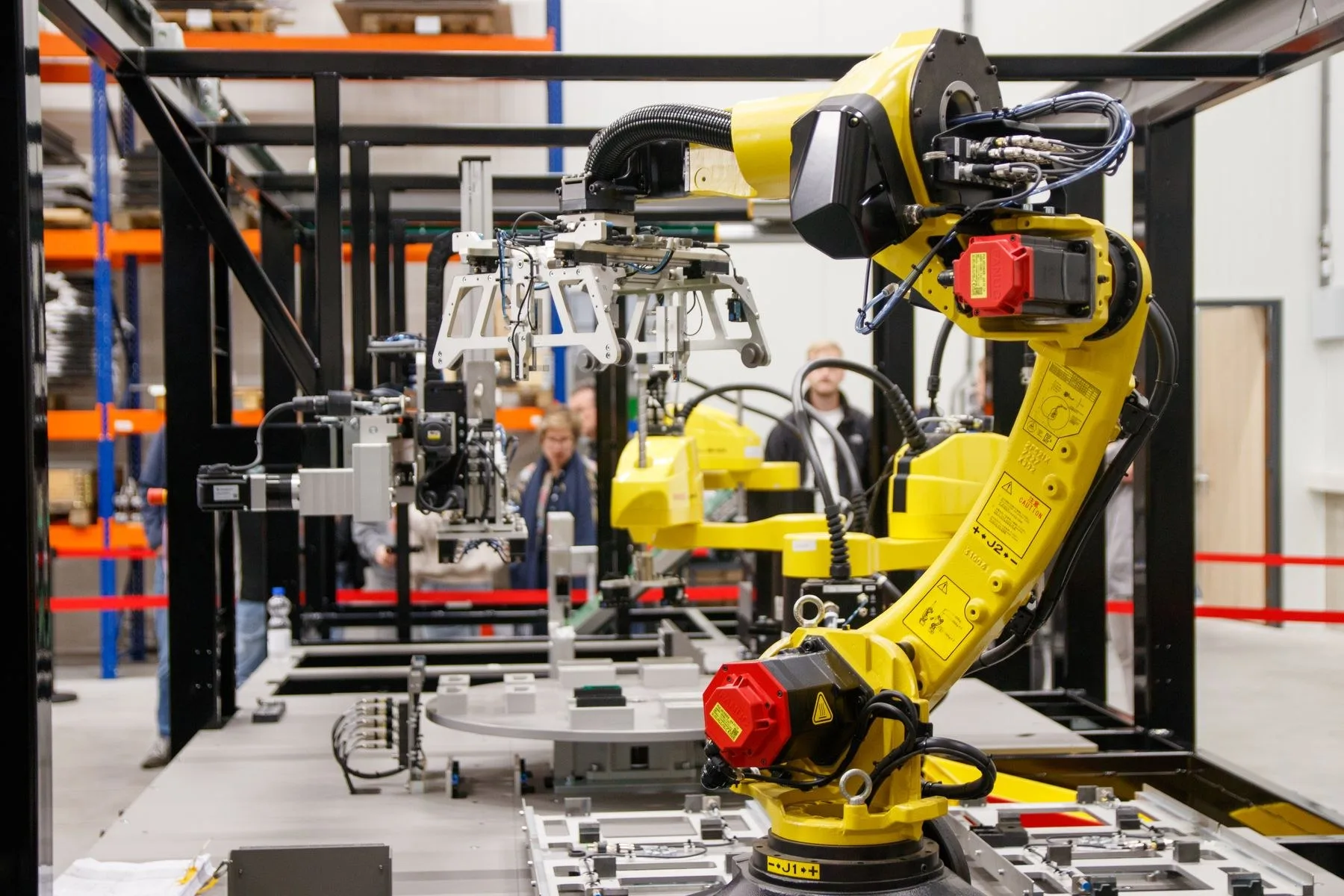
Fleet scale is the defining fact. Amazon alone reports more than a million robots in its fulfillment centers, most of them carrying shelving or totes between stations, and the handling tasks generate the data that matters: case picking, tote induction, pallet building. Boston Dynamics' Stretch, for example, is specified for cases up to 23 kg and builds mixed pallets up to 1.8 meters tall.
Warehouse environments are engineered for robots, which changes what the data can teach. Floors carry barcode or QR fiducials, racks are regular, and a given SKU sits in the same place: reliable for operations, and a generalization problem for models, because a policy trained in one facility has seen one arrangement of one product mix. A single site can carry hundreds of thousands of distinct SKUs, and the long tail is what breaks picking policies.
The data itself is closer to telemetry than to demonstration: fleet logs with positions, task states, grasp attempts and outcomes, often joined to warehouse management system records for what the task actually was. Because sites are private and layouts are commercial information, this data is almost always commissioned inside a specific facility under an agreement, not bought from a catalog.
Kinds of warehouse data
The largest category by volume is transport: mobile robots carrying shelving, totes or carts between stations. This is fleet telemetry more than perception, and what it records is positions, task states and timings across a whole floor. It is also the only data that shows congestion, queuing and route conflicts, because those are properties of the fleet rather than of any single robot.
The second category is picking, and it is the hardest. Piece picking from a bin, case picking from a pallet, tote induction at a station: each is a manipulation problem, and each needs camera and grasp-level signals rather than fleet logs. The long tail of odd items is the reason this data is commissioned far more often than it is bought off the shelf.
The third is palletizing and depalletizing: heavy payloads, stacking patterns and stability. The signals here are force, placement and the outcome of the stack, and the failure mode is different in kind, because a bad placement can look fine and collapse later. Sets also divide by scope of capture: a single cell, one zone or the whole facility.
Where it shows up in a quote
The first line in the quote is usually access, not data. Collection happens inside someone's building, so the agreement has to settle which zones may be recorded, which product lines may appear on camera and what may leave the site. Packaging and catalog images can be commercially sensitive even when no personal data is involved, and that permission is often the slowest part of a project.
The second line is the join. Fleet logs become far more useful when they can be tied to order and inventory records, because that is what turns "the robot moved a tote" into "the robot picked this order from this location". Specify which fields are required, and confirm early that the site operator will release them, since a log without the join rarely answers the question the buyer has.
The third line is coverage. One facility is one layout and one product mix, so a policy trained on it will be strong on that site's fast movers and weak on everything else. If the goal is a general picking policy, the brief should name how many sites and product families are in scope, and the evaluation should hold out whole sites.
Related terms
-
Mobile Robot Navigation Data
Sensor logs of a robot moving through space, with the poses, maps and trajectories needed to train or evaluate navigation.
-
Grasping Data
Images, depth maps or point clouds of objects, annotated with the gripper poses that would pick each one up.
-
Robot Gripper Data
Episodes and signals tied to the end effector, including width, force, vacuum pressure and whether the grasp held.
Keep reading
-
Full glossary
Every term we explain, in one list.
-
How to buy training data
Where these terms actually show up, and which ones change a quote.
-
Help center
How a project runs, from specification to delivery.
Submit a sourcing request
Tell us the language, the hours, and what the data needs to look like. You will get a real number and a real timeline, not a range. If we cannot source it well, we will tell you that instead.
- Pilot batch before the full run, so problems surface early.
- Consent documentation delivered with the data.
- No medical or clinical data. No recorded telephone calls.
- You send the spec Language, hours, recording conditions, and the deadline.
- We reply within two business days A real number and a real timeline, not a range.
- You approve a pilot batch A small run first, so problems surface before the full order.
- Full run, then delivery with documents Audio, transcripts, and the consent record for every speaker.